Precedents Introduction
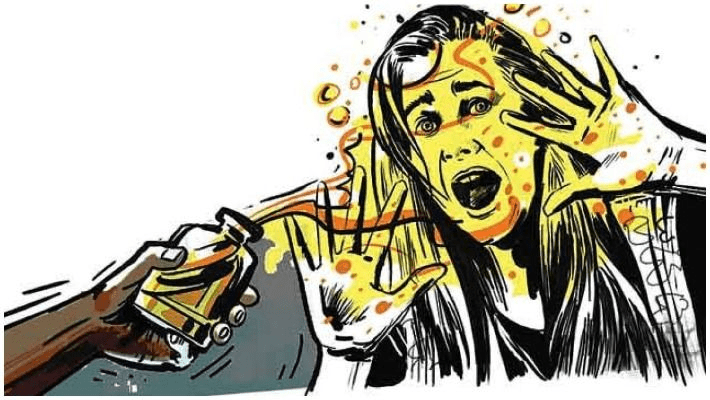
Acid attacks are among the most brutal crimes, inflicting severe physical, emotional, and psychological trauma on victims, often leaving them permanently disfigured and socially ostracized. This heinous crime is a grave violation of fundamental rights, particularly the right to life and dignity under Article 21 of the Indian Constitution. Recognizing the seriousness of acid attacks, the legal framework in India has evolved to impose stricter penalties and provide greater support to survivors.
With the enactment of the Bhartiya Nyaya Sanhita (BNS), 2023, which replaces the Indian Penal Code (IPC), legal provisions governing acid attacks have been revised. The Supreme Court of India has played a crucial role in strengthening protections for victims and ensuring stringent punishments for perpetrators.
Legal Provisions under Bhartiya Nyaya Sanhita (BNS), 2023 Under the BNS, 2023, acid attacks are now covered under:
- Section 123 (Corresponding to former IPC Section 326A): This provision penalizes the act of causing grievous hurt by using acid. The punishment includes a minimum imprisonment of ten years, extendable to life imprisonment, along with a fine that is meant to cover the medical expenses and rehabilitation of the victim.
- Section 124 (Corresponding to former IPC Section 326B): This section criminalizes the attempt to throw acid with intent to cause harm. It prescribes a minimum punishment of five years, extendable to seven years, along with a fine.
- Section 108 (Previously Section 307 IPC – Attempt to Murder): If an acid attack results in life-threatening injuries, the perpetrator may also be charged under Section 108 of BNS.
- Section 113 (Previously Section 302 IPC – Murder): If an acid attack leads to the death of the victim, the accused can be charged with murder and face life imprisonment or the death penalty.
Additionally, Section 376 of BNS (covering sexual offenses) provides for enhanced punishment if an acid attack is linked to sexual violence, ensuring stricter consequences for perpetrators.
Regulation on Sale of Acid
In response to the rising number of acid attacks, the Poison Control Rules, 2013, were introduced under the Environment Protection Act, 1986, following directions from the Supreme Court in Laxmi v. Union of India (2013). The key directives include:
∙ Ban on over-the-counter acid sales without identity proof. ∙ Strict regulation of acid sales by licensed vendors.
∙ Mandatory reporting of acid purchases to local authorities.
Despite these legal safeguards, enforcement remains a challenge, leading to continued instances of acid attacks.
Judicial Precedents Strengthening Acid Attack Laws
The Supreme Court of India has played a critical role in shaping legal responses to acid attacks. Some of the key judgments include:
- Laxmi v. Union of India (2013)
This landmark case led to the strict regulation of acid sales and the mandatory compensation for victims under Section 357A of the CrPC. The Court directed all states to provide a minimum compensation of ₹3 lakhs to acid attack survivors for medical treatment and rehabilitation.
- Parivartan Kendra v. Union of India (2015)
The Supreme Court held that acid attack survivors should be classified as disabled persons under the Rights of Persons with Disabilities Act, 2016, allowing them to access government benefits such as reservation in education and employment.
- Anurag Singh v. State of Uttar Pradesh (2022)
The Supreme Court ruled that burden of proof in acid attack cases lies on the accused. If the accused is found to have thrown acid, the law presumes intent to cause grievous harm, placing the onus on the defense to prove otherwise.
Laxmi Agarwal Case (2021)
The Supreme Court emphasized the need for free medical treatment for acid attack survivors in all government and private hospitals, along with legal aid and psychological counseling.
Compensation and Rehabilitation for Survivors
- Compensation under Victim Compensation Schemes:
o Acid attack survivors are entitled to compensation under the Nirbhaya Fund and State Victim Compensation Schemes. o The minimum compensation is ₹3–10 lakhs, depending on the severity of injuries.
- Free Medical Treatment:
o The Supreme Court mandates all government hospitals to provide free medical care, including reconstructive surgeries. 3. Employment and Education Support:
o The Rights of Persons with Disabilities Act, 2016, ensures reservations in jobs and education for acid attack survivors. 4. Legal Aid and Counseling:
o The Legal Services Authority Act, 1987, mandates free legal aid for survivors to seek justice and claim compensation.
Challenges in Implementation
Despite strong legal provisions, several challenges persist:
∙ Illegal Sale of Acid: Many vendors continue to sell acid without following regulations, making it easily accessible to criminals.
∙ Delays in Legal Proceedings: Survivors often face prolonged legal battles, delaying justice.
∙ Lack of Rehabilitation Facilities: While compensation is mandated, many survivors struggle to receive timely financial assistance and proper medical care.
∙ Social Stigma: Acid attack survivors face discrimination in employment and social life, necessitating better awareness and inclusion policies.
Way Forward: Strengthening Legal and Social Protections To effectively combat acid attacks, the following steps are essential:
- Stricter Enforcement of Acid Sale Regulations:
o Ensure strict monitoring of acid sales by local authorities.
o Impose heavier penalties on illegal vendors selling acid without authorization.
- Fast-Track Courts for Acid Attack Cases:
o Expedite trials by setting up dedicated fast-track courts for acid attack cases.
- Increased Compensation and Rehabilitation Support:
o Enhance compensation amounts based on medical needs. o Ensure survivors receive employment and education benefits without discrimination.
- Greater Public Awareness:
o Launch nationwide awareness campaigns to educate people on acid attack laws, survivors’ rights, and prevention strategies.
Conclusion
Acid attacks remain a serious criminal offense, but India’s legal framework under the BNS, 2023, and Supreme Court judgments provide a comprehensive mechanism for punishment, prevention, and survivor rehabilitation. While significant progress has been made in criminalizing acid attacks, regulating acid sales, and compensating victims, implementation gaps must be addressed to ensure that justice is swift, effective, and survivor
centric.
A holistic approach—stricter enforcement, legal reforms, social rehabilitation, and public awareness—is crucial to eradicating acid attacks and ensuring dignity, justice, and empowerment for survivors.